Tesla FSD on Hardware 3 in South Florida: 10,000 Miles From FSD 12 to v14.1 Lite
Short answer: My Tesla has driven itself for 81% of my miles: 10,039 of 12,419 since I got my 2023 Model 3 around July 2026. I started on FSD 12 and now run FSD (Supervised) v14.1 Lite, the version Tesla built for older Hardware 3 cars. My verdict: FSD 14.1 Lite on HW3 is a huge improvement from 12, with room for improvement.

My numbers
My white Tesla goes by White Lotus. Its Self-Driving Stats screen shows:
- 81% of miles self-driven: 10,039 of 12,419
- Longest streak: 217.5 miles
- Current streak: 18 days in a row using FSD
- Miles per month: about 2,200 in July, 4,000 in August, 3,500 in September and 1,100 in October through the 12th

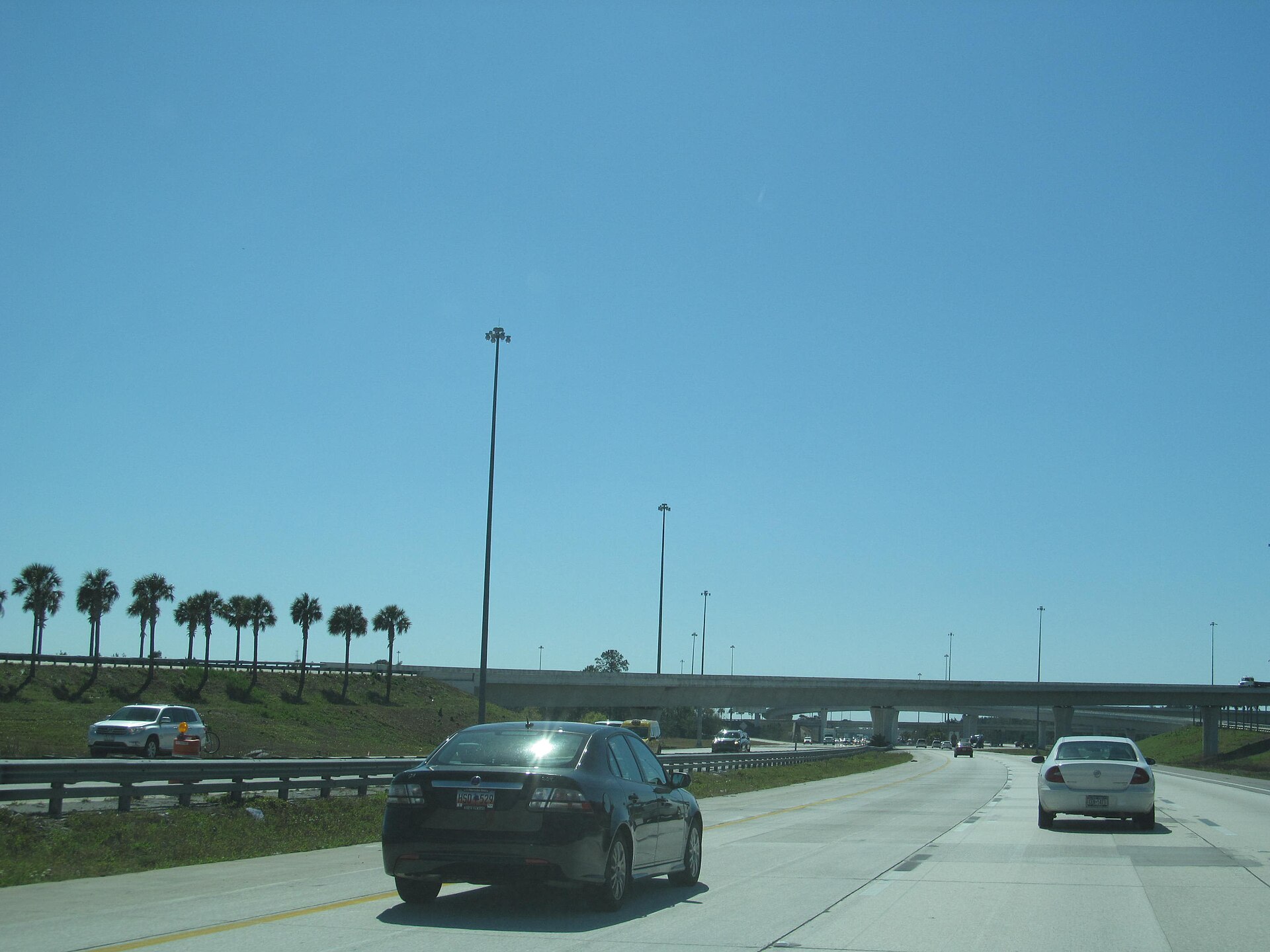
Most of those miles come from rideshare driving around Broward and up and down I-95, plus DGM Flowers and Tye Travel errands. On top of that come road trips out of town, like Port Canaveral and Key West. That’s a lot of highway, city streets and airport-style pickups for FSD to handle. (If you’re wondering what all those miles cost me in electricity, I broke it down in home charging vs Superchargers in South Florida.)
What FSD v14.1 Lite is
If your Model 3 or Model Y was built roughly before 2024, it probably has Hardware 3 (HW3). HW3 can’t run the full v14 software that newer Hardware 4 cars get, so Tesla made a “Lite” version.
- v14 Lite first reached HW3 cars in stages from late June 2026. Some owners reported an “accelerator pulsing” feel and a warning about the Autopilot computer’s temperature.
- v14.1 Lite came in firmware 2026.21.6 starting August 9, 2026, in waves, North America only. Tesla says it “distilled” HW4’s v14 into HW3, using HW4 as a teacher.
- Tesla’s release notes list better handling of merges, forks, pedestrians, traffic lights and cars cutting in; fewer false slowdowns, smoother steering and steadier lane centering; parking, unparking and reversing; Arrival Options, which let you choose to park in a lot, on the street or in a driveway; and Speed Profiles available at all times.
- Early reviews found the pulsing problem from the first Lite build was fixed.
Sources: Tesla release notes via Not a Tesla App and TeslaDB; rollout coverage from TeslAnt and GetTesla.
My car: White Lotus is a 2023 Model 3 Rear-Wheel Drive in Pearl White with 18″ Aero wheels. Full Self-Driving (Supervised) came with the car. It’s a Hardware 3 car, so it runs v14.1 Lite, the HW3-only branch. It’s currently on software 2026.26.6.5 with FSD (Supervised) v14.1 Lite installed.

In Tesla’s own words on my screen, v14.1 Lite:
- “Distilled the intelligence from HW4 V14 into HW3,” letting HW3 learn from HW4 V14 “as a guide.” Tesla says this “unlocks the improvements that have been made to HW4 including Reinforcement Learning (RL) and offline models for HW3.”
- “Improved both proactive and reactive responsiveness” in navigation handling, merges and forks, pedestrian interactions, traffic lights and vehicle cut-ins.
- “Improved general comfort in nominal scenarios through fewer false slowdowns, smoother steering” and more consistent lane centering.
FSD 12 vs 14.1 Lite: what changed for me

I started on FSD 12 when I got the car and now run v14.1 Lite on the same car and the same rideshare and I-95 routes. That makes the release-note claims above easy to test day to day, and the jump from 12 is huge.
| Version | Hardware | Status for me |
|---|---|---|
| FSD 12 | HW3 | What I started on when I got the car |
| FSD v14.1 Lite | HW3 only | What I run now (software 2026.26.6.5) |
| FSD v14.3.12 | HW4 only | Released October 10, 2026. Not available on my car |
What still bugs me:
- Lane merging. It usually merges only about 0.2–0.3 miles before an exit, which is a problem in heavy traffic when you need to get over sooner so you don’t miss the exit.
FSD in South Florida rain

In my experience, FSD handles rain very well overall, including the South Florida downpours I drive through. The one caveat: when the rain is so heavy it obstructs the cameras, it sometimes struggles making turns. It’s still supervised, so I keep my eyes on the road and stay ready to take over.
The interventions that matter
For the most part, I only disengage when there are a lot of potholes or really bad roads. Beyond that, the takeovers I think about are the two I already mentioned: late lane merges before an exit in heavy traffic, and turns in rain so heavy it blocks the cameras.
Then there are the moments that win me over. I’m always impressed when the car swerves around a car backing out into the road, or slows down for a small cat or dog crossing the street. Those are the moments that make 81% feel earned.
Is FSD worth it on HW3?

My Model 3 came with Full Self-Driving (Supervised) included, so I don’t pay a monthly fee. For anyone else, FSD is subscription-only now: $99 a month, or $49 a month with Enhanced Autopilot, since Tesla ended one-time purchases on February 14, 2026. A used HW3 car that already includes FSD, like mine, avoids that fee.
My take: FSD pays for itself when a car drives itself 81% of the time. It’s like having your own chauffeur. Since mine came with the car, I’m not the one writing the $99 check, so here’s how I’d think about it if I were:
- Worth paying for if you drive a lot like I do: rideshare, long I-95 runs, road trips. The more miles you put on, the more of that $99 a month you actually use.
- Harder to justify if you mostly make short trips around town. And if you’re shopping used, look for an HW3 car that already includes FSD so you skip the fee entirely.
- Know the HW3/HW4 gap. HW3 cars like mine are on the Lite branch. The newest release, v14.3.12, is HW4 news only. v14.1 Lite is still a huge step up from 12 on my car, but HW3 owners get the distilled version, not the latest one.
The news I don’t have yet: FSD v14.3.12 (HW4 only)
On October 10, 2026, Tesla released FSD v14.3.12 (update 2026.38.5) for Hardware 4 cars only. I’m on HW3, so I don’t have it. According to Tesla’s release notes, it adds:
- a rewritten AI runtime with about 20% faster reaction time
- less tailgating and lane biasing
- better handling of complex traffic lights, school buses and emergency vehicles
- an intervention-free distance counter
- Smart Summon up to 8 mph
HW3 owners like me are still on the Lite branch.
And on Thursday, October 15, Tesla reveals the new Roadster near Waco, Texas, at 6 p.m. PT (9 p.m. ET). The headline is a demo where the car hovers on a SpaceX-built thruster, with production guided for 2027 to 2028 and no price since the $200,000 announced in 2017.
FAQ
What is FSD v14.1 Lite?
It’s Tesla’s FSD (Supervised) build for Hardware 3 Model 3 and Model Y cars, released in firmware 2026.21.6 starting August 9, 2026. It brings a distilled version of HW4’s v14 to older cars and adds parking, Arrival Options and Speed Profiles.
Does HW3 get FSD v14.3.12?
No. As of October 12, 2026, v14.3.12 is HW4 (AI4) only.
How much does FSD cost in 2026?
$99 a month, or $49 a month with Enhanced Autopilot. One-time purchase ended February 14, 2026.
Does FSD work in Florida rain?
In my experience on v14.1 Lite, it handles rain very well overall. When the rain is so heavy it obstructs the cameras, it sometimes struggles making turns. It’s still supervised, so the driver stays ready to take over.
Stats are from my car’s Self-Driving Stats screen, Oct 12, 2026. FSD is supervised; I’m responsible for the car at all times. Related: what it really costs me to charge my Tesla at my condo vs Superchargers.
Discover more from Tye Gordon
Subscribe to get the latest posts sent to your email.
Share This Story, Choose Your Platform!
Related Posts



.jpg)


Sign up with your email and always get notifed of Avada Lifestyles latest news!
Popular Tags
Photos From Flickr
Discover more from Tye Gordon
Subscribe to get the latest posts sent to your email.